Kobina Nyarko · Ocean’s Voice · an exhibition you can dive into
Dive with Kobina
He has painted the sea off Ghana for more than twenty years. Now he takes you down into it. Down to where the light ends, and back up again.
12 m · Scene 1 of 9
The blue
heart
“The ocean, so beautiful, so boundless, so blue.”
Feeling the Ocean’s Voice · opening words
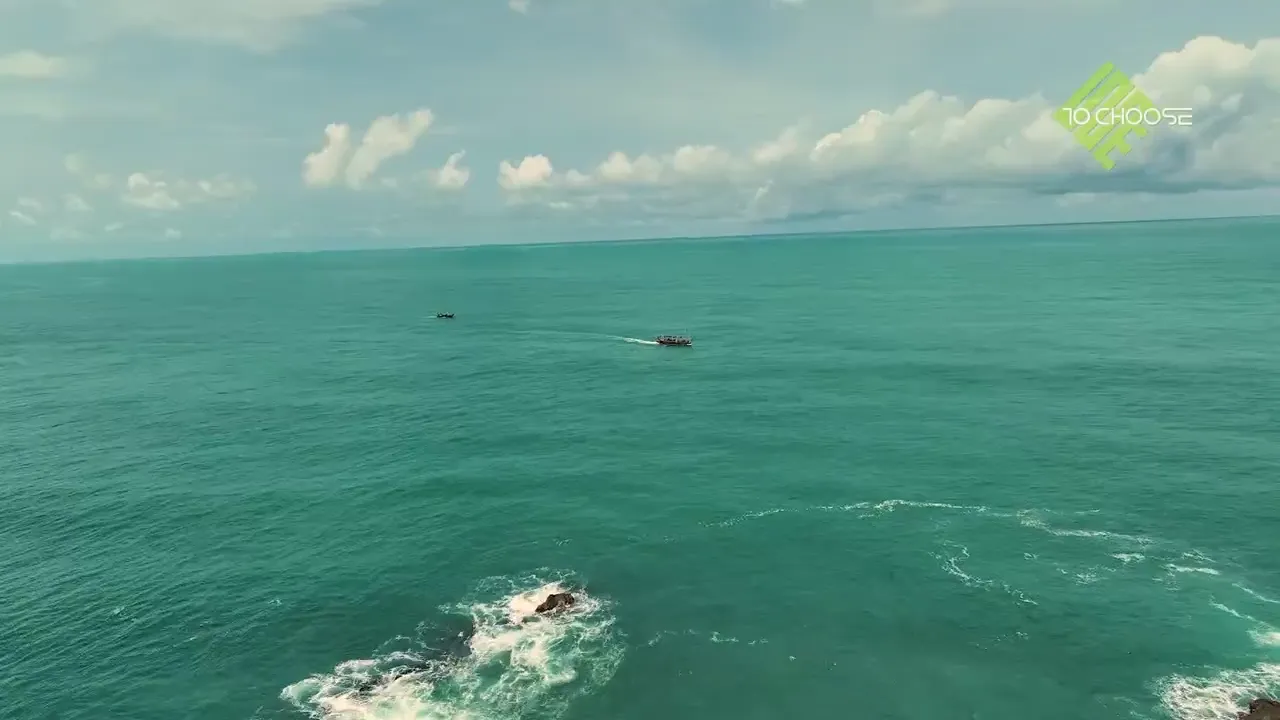
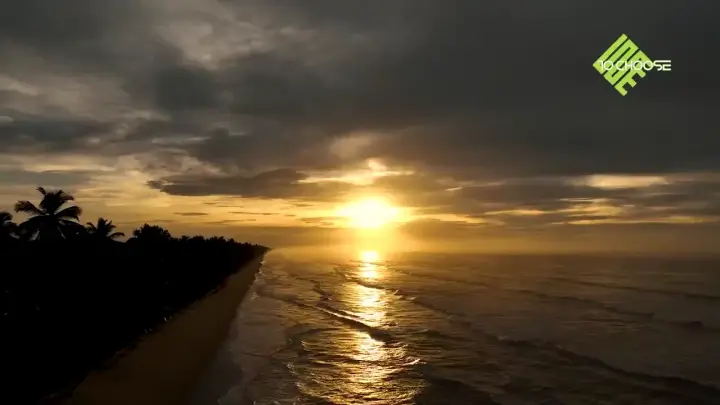
Every second breath you take comes from the sea. It covers most of our planet, it carries the heat we produce, and it feeds the coast where Kobina grew up. This is where the dive begins: in clear water, above the fishing boats of Ghana’s Western Region.
Scene 1 · The Vital Role of the Ocean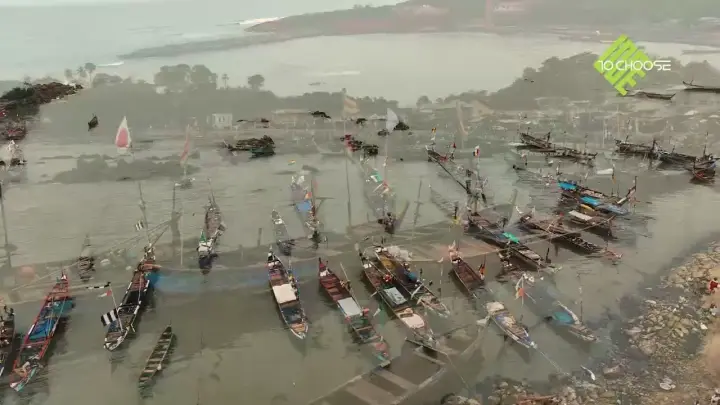
60 m · Scene 2 of 9 · Genesis of the work
“It dawned on me to live in a shark’s eye, to paint from that perspective.”
Kobina Nyarko
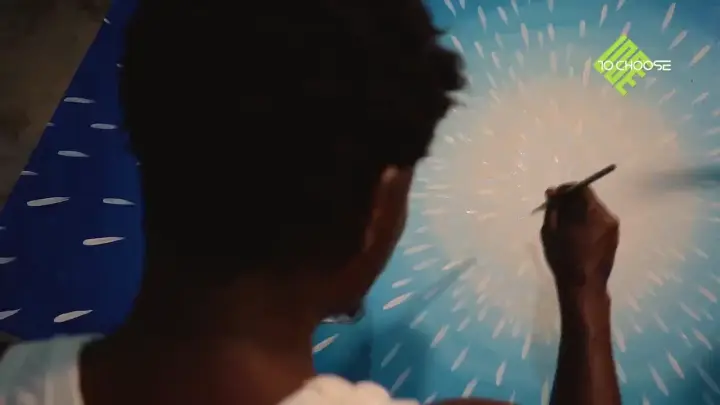
Thousands of strokes, one shoal
Kobina paints every fish as a single stroke. On the canvas they turn into currents, whirls and light. Move your pointer: the shoal around you follows.
Scene 2 · Genesis of the Work120 m · Scene 3 of 9 · Change of perspective
The colours
on the beach
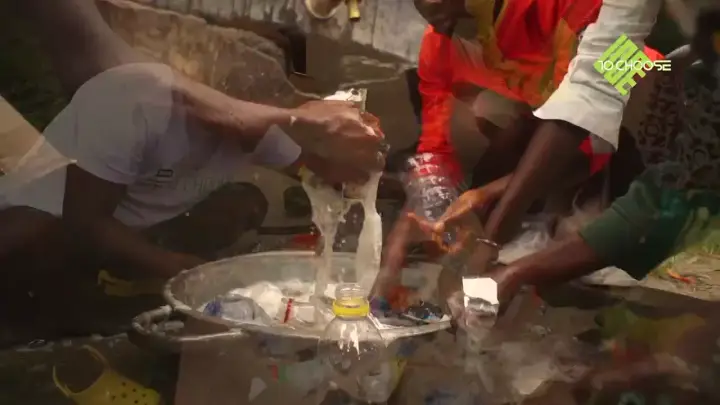
“I came to realize the beauty of the colors in it.”
Kobina Nyarko, on the plastic the sea washes ashore
He started collecting to clean the beach. Then he saw the colours, and the plastic went into the paintings. From here on, it sinks with you. Tap the pieces to pull them out.
Scene 3 · Change of Perspective200 m · Scene 4 of 9 · Climate change
Red
alert
“I’ve been using the reds, orange, and yellow to make that artistic statement.”
Kobina Nyarko
The sea is warming faster than ever measured. Corals bleach, fish move away from the coast. Kobina’s shoals turn from blue to fire.
Scene 4 · Climate ChangeWhen the last fish dies, the last man dies
Kobina’s warning, written by his shoal. Keep diving: as more plastic sinks in, the fish can no longer hold the words.
360 m · Scene 5 of 9 · Forbidden
Forbidden
“I found a shop which was selling a forbidden net, and I purchased from there.”
The mesh is so fine that nothing escapes it, not even the young fish. Kobina found it washed ashore, followed it to the shop and worked it into a painting.
acrylic on canvas with a forbidden fishing net
photo follows
450 m · Beyond the film
The silver river
Kobina paints the plastic you can see. But the water off his coast carries something you cannot see. Inland, in the gold belt around Tarkwa and Obuasi, thousands of illegal mines, called galamsey, dig up the riverbeds. To bind the gold, the miners use mercury.
The rivers Pra and Ankobra carry the mud down to the coast. Where the Pra meets the Atlantic at Shama, a few kilometres from Takoradi, fishermen watched the blue sea turn brown. Turbidity there was measured at around 3,000 NTU.
In the Ankobra estuary, researchers from the University of Cape Coast found an average of 13 mg of mercury per kilo of sediment, eighteen times that level, and mercury in the gills and livers of the catfish people eat. Worldwide, small-scale gold mining is the largest source of man-made mercury emissions.
The connection
Protecting the sea means protecting the rivers that feed it.
In April 2026 Ghana declared its first marine protected area at Cape Three Points, between the two river mouths. Activists warn it cannot work while the rivers stay poisoned. As one put it, that would be like “locking the front door while leaving every window open”.
1,000 m
Down here,
no light arrives
Move your light.
And yet
Ascent · Scene 6 of 9 · Hope and recovery
“My art piece, Rainbow in the Atlantic Ocean, symbolizes hope.”
Kobina Nyarko · Scene 6 · Hope and recovery
Plastic pieces rise and form the work Rainbow in the Atlantic Ocean.
Waste with a value
Kobina washes, sorts and cuts the plastic by colour and uses it like paint. Around his studio people now collect plastic because he buys it from them. What was rubbish has become an income, and the beaches get cleaner.
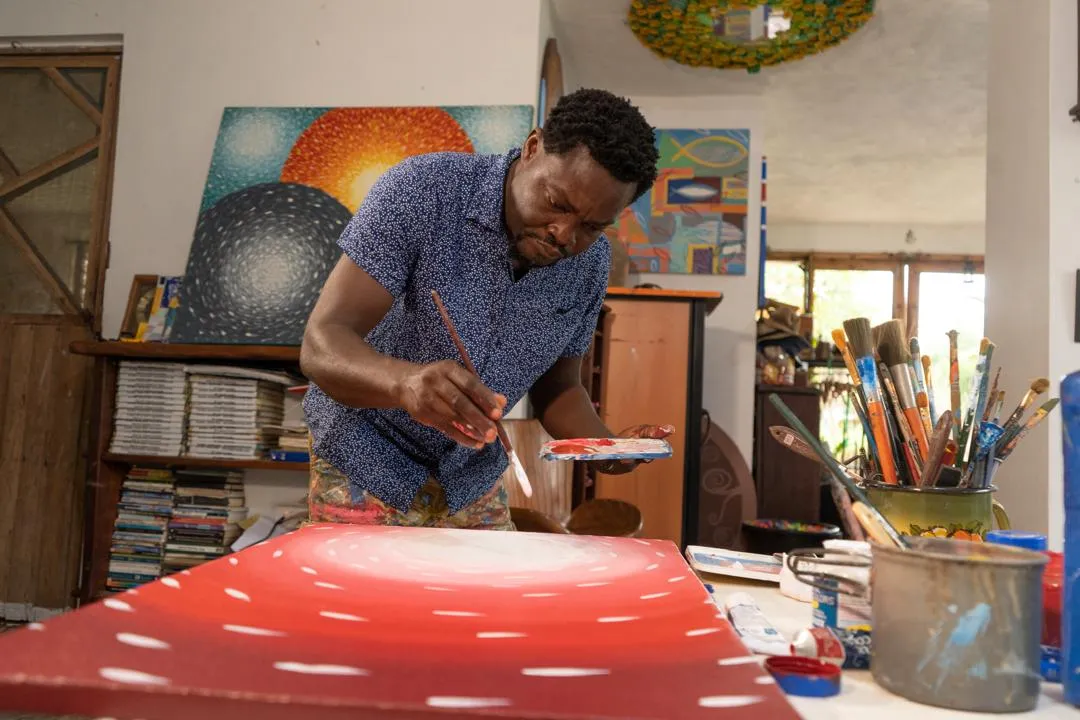
Scene 7 of 9 · Call to action
I see myself as the voice of the ocean and therefore welcome you to be on board.
Kobina Nyarko · Scene 7 · Call to action
Scene 8 of 9
Nothing can
be done
less plastic pollution by 2040. That is what the UN Environment Programme calculates is possible with tools that already exist.
“Let’s overcome the nothing can be done mentality.” Anna, To Choose · Scene 8 · Nothing can be done?
Scene 9 of 9 · The power of art
The exhibition
Sixteen framed works by Kobina Nyarko, hung like a reef you can walk along. The same dive, now in a room.
“Art does not only inspire change, it transforms spaces.”
Anna, To Choose · Scene 9 · The power of art
Shoal ShowerKobina NyarkoAcrylic on canvas133 × 153 cm
Behind the FlowKobina NyarkoAcrylic on canvas
The Choicest DecisionKobina NyarkoAcrylic on canvas100 × 180 cm
Discovered Species, 2018Kobina NyarkoAcrylic on canvas92 × 163 cm
Birth of New SpeciesKobina NyarkoAcrylic on canvas101 × 140 cm
Hunting SkillsKobina NyarkoAcrylic on canvas101 × 120 cm
Birth of Holes, 2019Kobina NyarkoAcrylic on canvas80 × 80 cm
Red ShoalKobina NyarkoAcrylic on canvas119 × 239 cm
Climatic ChangeKobina NyarkoAcrylic on canvas107 × 107 cm
Crown SeekersKobina NyarkoAcrylic on canvas220 × 100 cm
The Spirit Within SurvivorsKobina NyarkoAcrylic on canvas102 × 152 cm
Surfers BoundaryKobina NyarkoAcrylic on canvas97 × 201 cm
To the Agreed Location, 2019Kobina NyarkoAcrylic on canvas80 × 80 cm
Warm Passage, 2020Kobina NyarkoAcrylic on canvas152 × 100 cm
Circus in the Sea, 2015Kobina NyarkoAcrylic on canvas142 × 107 cm
Rainbow in the Atlantic OceanKobina NyarkoPlastic collected from sea shore on canvas (~30 kg)142 × 279 cm
What travels with it
One world,
five ways in
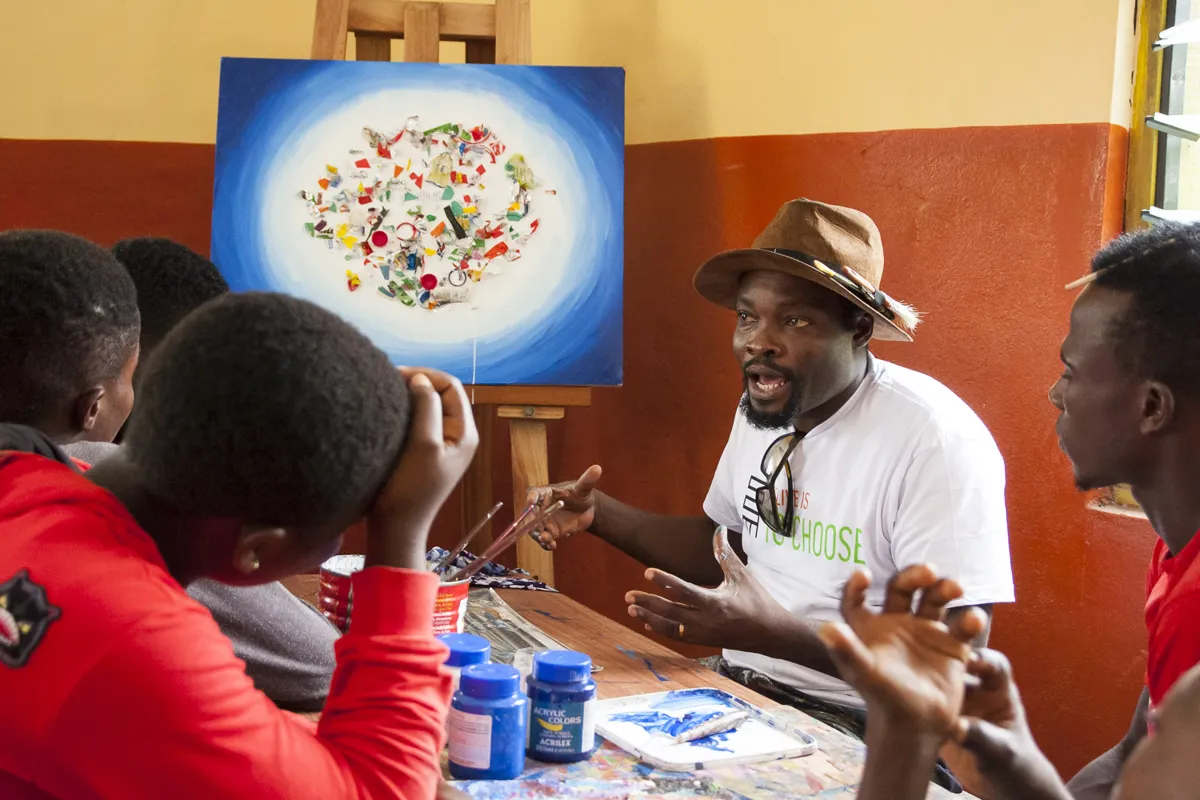
On Sylt in 2024 Kobina’s paintings went into three schools, and children worked with his motifs and with beach plastic. Dive with Kobina takes that further.
Framed works
The dive as a walk: blue water, the plastic, the red alert, the darkness and the rainbow at the end.
Film scenes
Feeling the Ocean’s Voice, shot in Takoradi, as a cinema corner. Each scene belongs to a part of the room.
School workshop
Classes make their own shoal from cleaned beach plastic, the way Kobina does. As on Sylt, the works go into the schools too.
Beach or river clean up
Visitors collect, sort and bring their finds back to a collection wall in the exhibition.
Talk about the rivers
Gold, mercury and the sea: an evening with scientists and ocean people on what reaches the coast and what can stop it.
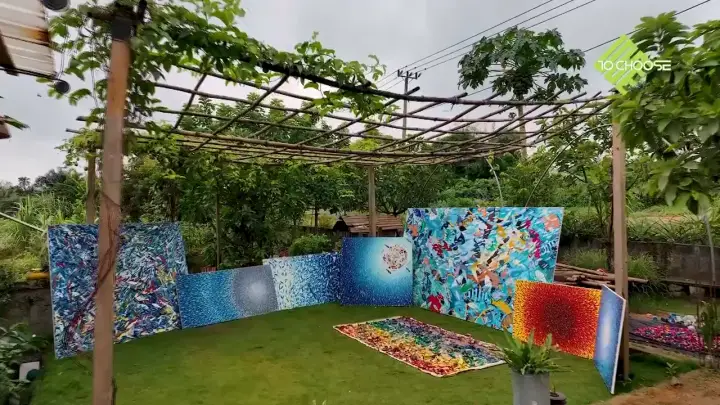
Kobina’s paintings in an open air garden exhibition.
For people who love the sea
- Aquariums and ocean museums
- Islands and coastal towns
- Dive and sailing clubs
- Ocean foundations
- Schools and universities
- Companies that work with water
- Hotels by the sea
Bring the ocean
to your town
Host Dive with Kobina: sixteen works, the film, the workshops and the questions they raise.
Sources
- Ocean surface and oxygen: NOAA, How much oxygen comes from the ocean? ↗
- CO₂ uptake and doubled warming rate: UNESCO, State of the Ocean Report 2024.
- Plastic in rivers and oceans: OECD, Global Plastics Outlook 2022, via Smart Water Magazine ↗.
- Pra river at Shama, sea turned brown, about 3,000 NTU: Daily Graphic, 15 October 2022 ↗.
- Mercury in the Ankobra estuary: Adebote, Aggrey-Fynn, Mensah, PLOS One, June 2025 ↗.
- Small-scale gold mining as largest source of mercury emissions: UNEP, Global Mercury Assessment ↗.
- Marine protected area Cape Three Points and the river threat: Ghana News Agency, July 2026 ↗.
- 80 % less plastic pollution by 2040: UNEP, Turning off the Tap (2023), via World Economic Forum ↗.
- Quotes: Feeling the Ocean’s Voice, To Choose, filmed in Takoradi 2024.