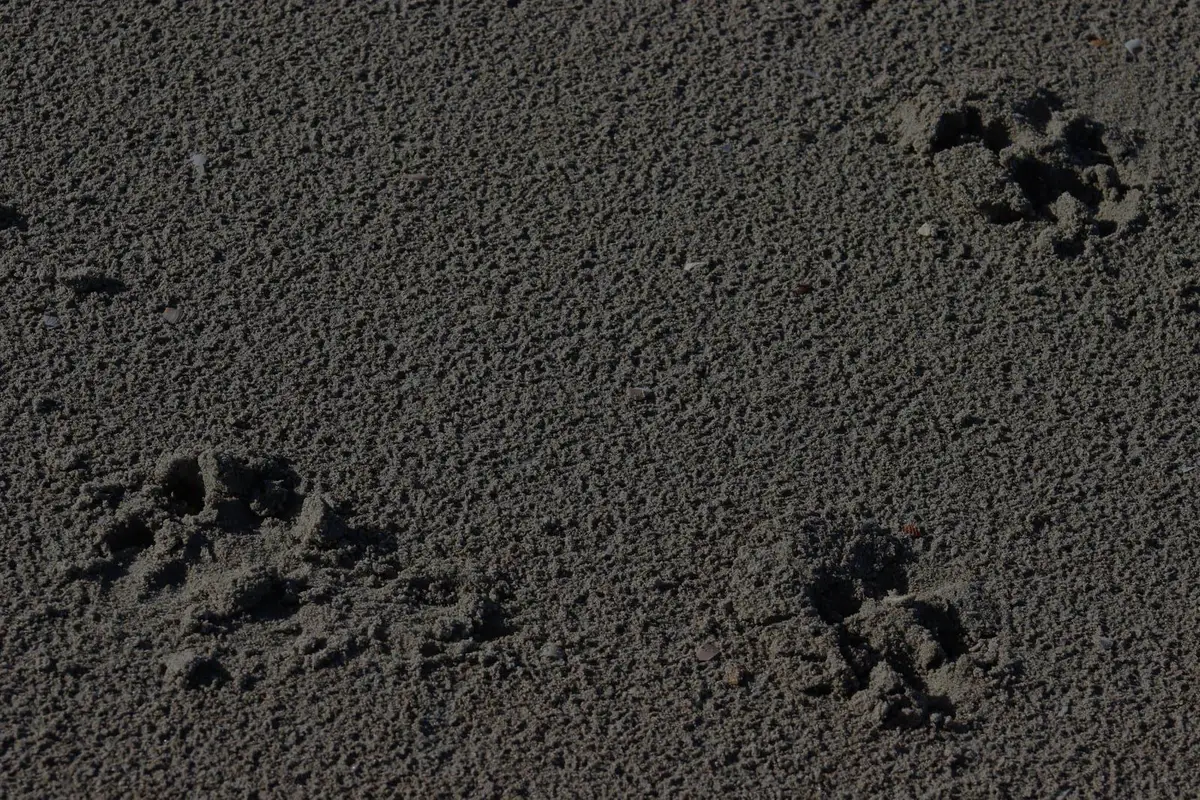
The Earth at night with Africa and Europe in view. Lines of light run from Accra, Cape Coast, Takoradi and Cape Town to Munich, small pieces of plastic circle the planet.

Galerie WELTRAUM, Munich · 25 and 26 July 2025

Earth
in Orbit

Between plastic and planet. Between roots and responsibility.

Eight artists from Ghana, South Africa and Munich. Drag to turn the Earth. The fragments in orbit are plastic.

On 24 July 2025 humanity had used up the resources the Earth can renew in a year. One day later, eight artists from Ghana, South Africa and Munich opened Earth in Orbit at Galerie WELTRAUM in Munich.

The overshoot is not only ecological. We live with too much speed, too much loss and too little connection. Earth in Orbit answers with art: three orbits that lead from the planet to the systems we live in and on to the memories we carry.

Galerie WELTRAUM, Munich · 25 and 26 July 2025 · opened one day after Earth Overshoot Day (24 July 2025)

Earth Overshoot Day 2025

The year in debt

The ring is 2025. Green are the days in which humanity lives on what nature renews in a year. From 24 July on, the ring turns red: for the rest of the year we use resources the Earth cannot replace.

  • 204 days within budget
  • 161 days in overshoot

Source: Global Footprint Network, overshootday.org ↗

Orbit 1

Planet & Poetry

What remains when everything breaks?

In a time of planetary crisis, art reminds us what is still beautiful. This orbit begins at the sea, with awe and with urgency.

Featured artists: Michelle “Mishvania” Beattie, Kobina Nyarko

Portrait of Michelle “Mishvania” Beattie

Michelle “Mishvania” Beattie

Cape Town, South Africa

Waste into wonder

Mishvania builds her sculptures from plastic she collects on the beaches near Cape Town.

She does not melt or reshape it. The pieces look like coral, shells and small worlds from the deep sea, and only on a second look do you see what they are made of. Her question: can we still make something beautiful from what we have broken?

“I’ll continue to collect plastic from the beach and create pieces that bring a sense of joy but also spark conversations around the devastation of plastic in our oceans.”
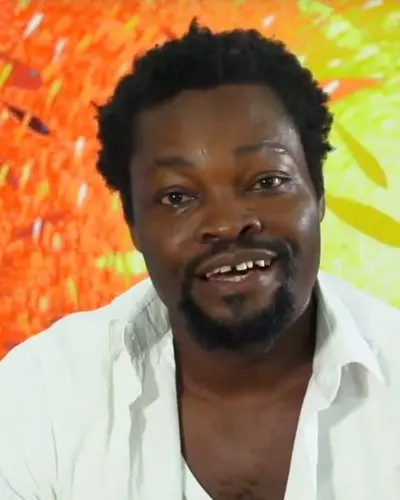
Portrait of Kobina Nyarko

Kobina Nyarko

born 1972 in Takoradi, Ghana

He paints the ocean as if it were breathing

Kobina’s canvases are full of fish, floating, turning and multiplying.

Under the movement lies unrest. In Birth of Holes the sea is both origin and emptiness. In Climatic Change the patterns break and the currents shift. Kobina does not lecture. He lets the ocean speak, of cycles, collapse and renewal. Our film Ocean’s Voice shows how he works and what the sea means to him.

Oh I See, 2024Michelle “Mishvania” BeattieOcean plastic22.5 × 29 cm

Coral Rehabilitation, 2024Michelle “Mishvania” BeattieOcean plastic22.5 × 53.5 cm

Coral Blooms, 2024Michelle “Mishvania” BeattieOcean plastic14 × 14 cm

The Enchanted Forest, 2024Michelle “Mishvania” BeattieOcean plasticDIN A2 (42 × 59.4)

Birth of Holes, 2019Kobina NyarkoAcrylic on canvas80 × 80 cm

To the Agreed Location, 2019Kobina NyarkoAcrylic on canvas80 × 80 cm

Orbit 1 · Planet & Poetry

Orbit 2

Identity & System

Who are we, and who decides that?

These works look at personal identity, at the structures of society and at the power that shapes both. They lead from the self to society and on to history.

Featured artists: Isshaq Ismail, Dion Cupido, Fadiel Hermans

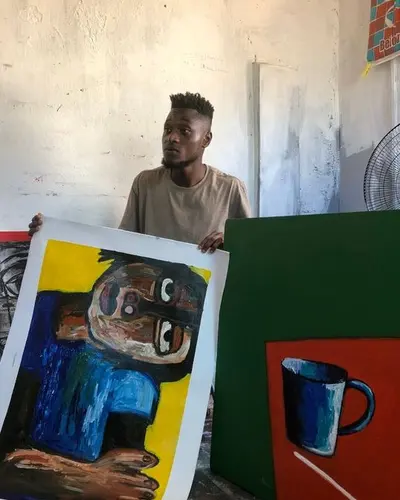
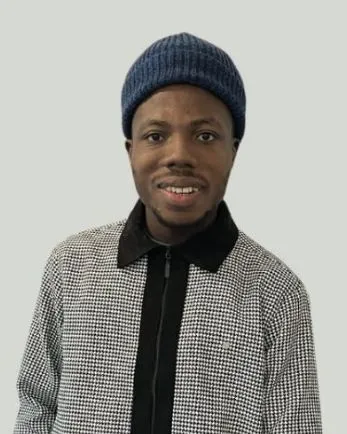
Portrait of Isshaq Ismail

Isshaq Ismail

born 1989 in Accra, Ghana

A cup, a fork, and a whole life

In this early painting there is no face and no hand: a metal mug, a white plastic fork and a red surface on green.

Only the traces of someone living, or surviving. The picture asks what life puts in front of us and what we make of it. Cup and Fork came years before the heavy impasto portraits Isshaq is known for today.

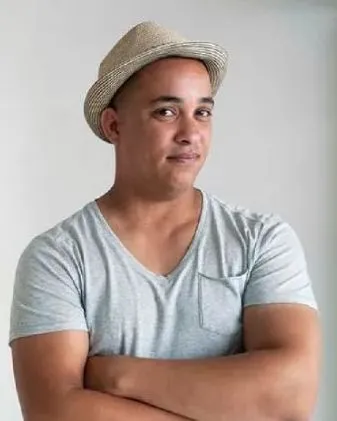
Portrait of Dion Cupido

Dion Cupido

born 1973 in Cape Town, South Africa

Laughter as camouflage

Three heads on one body, each with a wide, almost manic smile.

Their skin is covered in scribbles, tags and insults, labels other people have written on them. Dion grew up under apartheid and knows what it costs to be seen. Demockery asks how much of what we show is really ours, and whether society rewards honesty or performance.

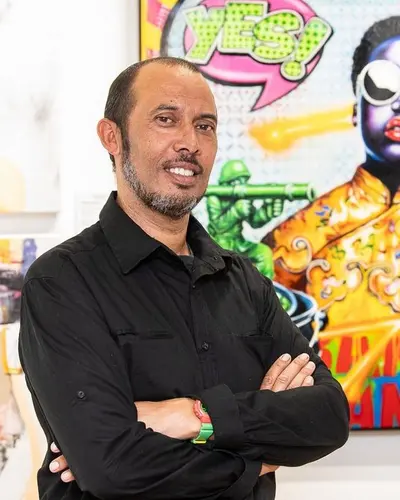
Portrait of Fadiel Hermans

Fadiel Hermans

born 1971 in Cape Town, South Africa

A system that smiles while it burns

Fadiel’s emperor recalls Cecil Rhodes, colonial conqueror and capitalist icon, but he could stand in any hall of power today.

A golden halo, a smiling plastic bag, a city in flames, dead fish at his feet. History, economy and ecology collapse into one picture. The painting is satire and warning at once, and it shows why identity and systems cannot be separated.

Cup and Fork, 2017Isshaq IsmailAcrylic on canvas82 × 67 cm

DemockeryDion CupidoAcrylic on canvas119 × 119 cmPrivate collection

Emperor, 2021Fadiel HermansAcrylic on canvas100 × 100 cmPrivate collection

Orbit 2 · Identity & System

Orbit 3

Memory & Belonging

Where do we belong?

Where we come from, what stays with us and where we go next. In this orbit, textiles become testimony and fabric becomes an archive.

Featured artists: Michael Gah, Emmanuel Aggrey Tieku, Falk von Schönfels

Portrait of Michael Gah

Michael Gah

born 1995 in Accra, Ghana

Belonging is something you stitch together

Michael does not paint.

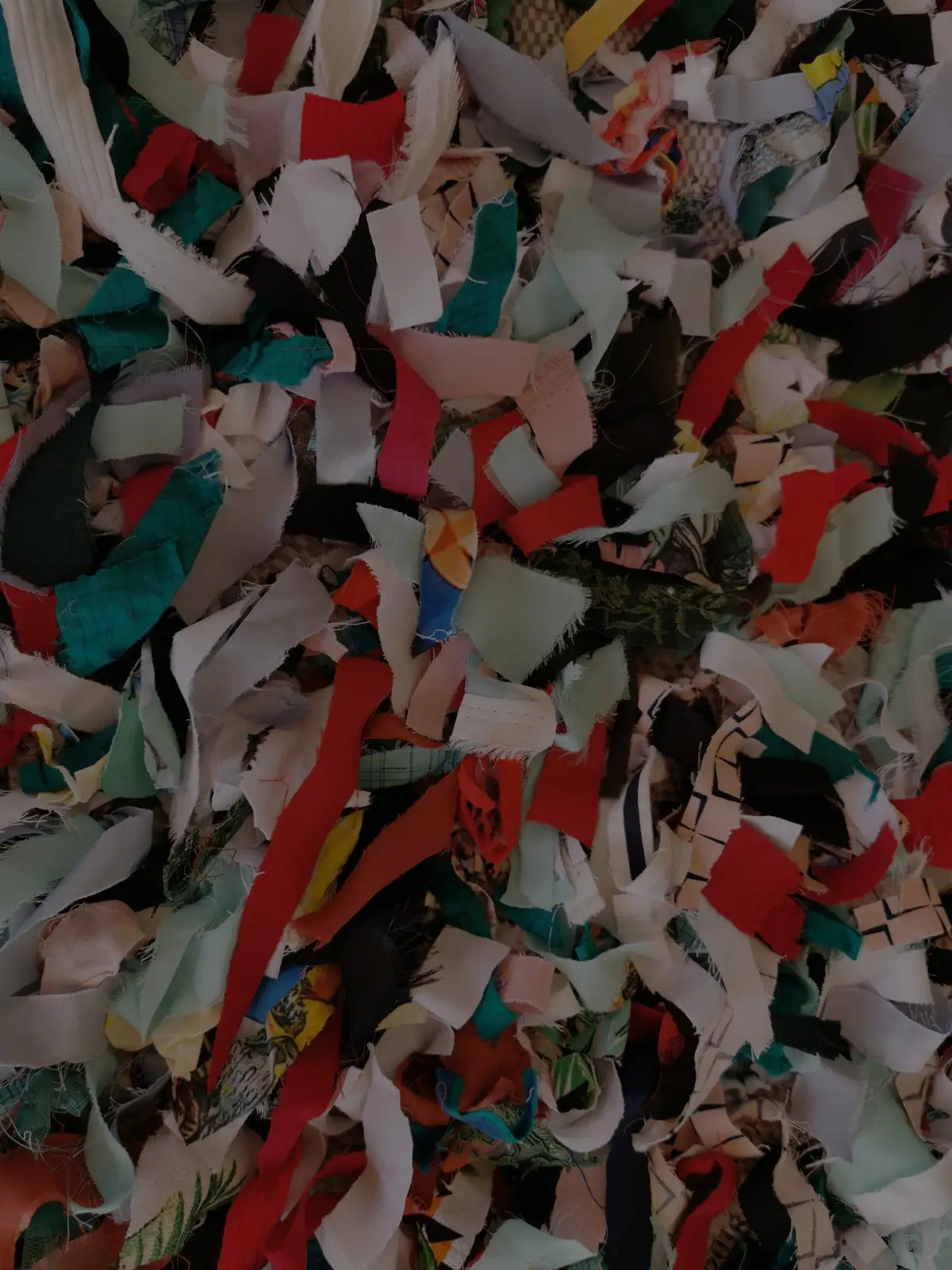
He assembles, stitches and layers fabric that others threw away, from Ghana’s textile dumps, from Kantamanto market and from his mother’s sewing room. His newest works recall the disco era and honour women who are loud, soft, proud and alive. Orange Moment is a portrait made from forgotten fabric.

Portrait of Emmanuel Aggrey Tieku

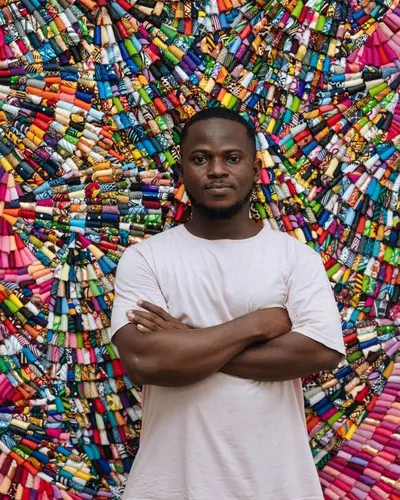
Emmanuel Aggrey Tieku

born 1994 in Cape Coast, Ghana

Fabric that remembers

On the wall hung Songs of Summer, a textile relief in faded pinks and sun-bleached yellows, stitched together like a photo album.

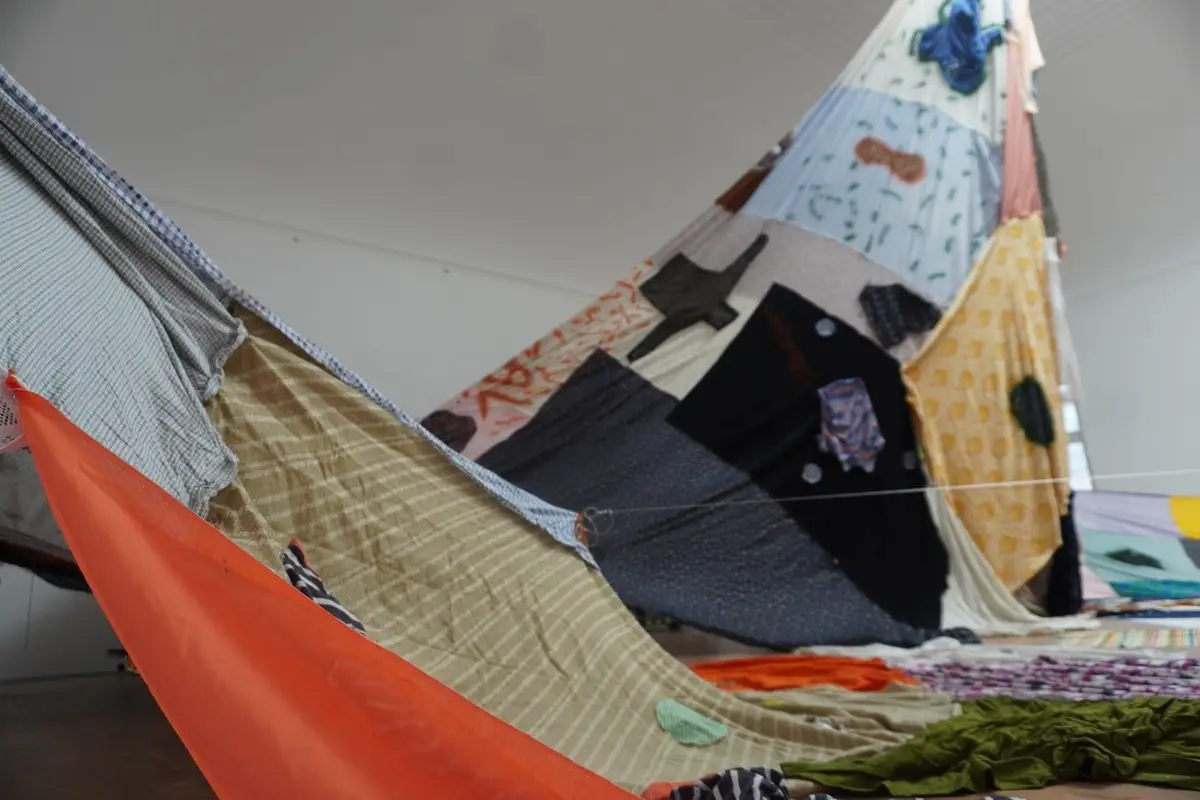
In the centre of the room lay How to Heal a Broken World, the ribbon of discarded clothes that Emmanuel has been building since 2020, marked by oil, ash and family stories. Emmanuel does not simply reuse material. He gives it back its history.

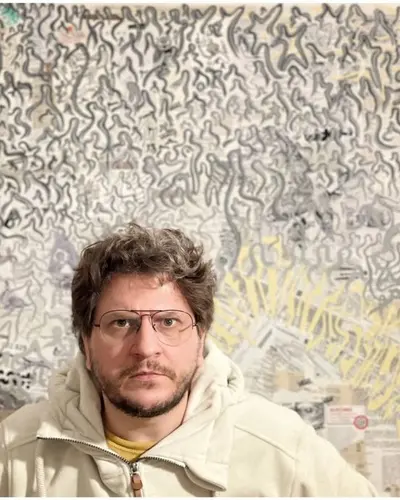
Portrait of Falk von Schönfels (Fluctibus)

Falk von Schönfels (Fluctibus)

Munich, Germany

The receipts of a life

Some people document history.

Fluctibus documents lunch. For My Life in Receipts he rolled, pressed and arranged 2,662 thermal receipts, many already yellowed. The work is obsessive, quiet and a little funny, and it shows how much of a life is recorded in transactions: what we bought, where we went, when we paid.

The ribbon of How to Heal a Broken World, hung in tall folds of patched fabric.

In the centre of the room: How to Heal a Broken World

Orange Moment, 2025Michael GahTextile on wood120 × 147 cm

Songs of Summer, 2024Emmanuel Aggrey TiekuPaint and fabric dye on discarded clothing100 × 120 cm

My Life in ReceiptsFalk von Schönfels (Fluctibus)2,662 hand-rolled and pressed receipts100 × 70 cm

Orbit 3 · Memory & Belonging

Orbit One: Munich

The opening

Earth in Orbit opened at Galerie WELTRAUM in Munich in July 2025. Artists, activists and people who just walked in from the street spent two evenings with the works, wrote on the ribbon and left their thoughts in the guestbook. It was the first orbit.

What stays with you?

A To-Choose production with Galerie WELTRAUM

Join the Orbit

Earth in Orbit is built to travel, and so are its questions. Would you like to host the next orbit in your city, your company or your institution? Talk to us.